Showing posts with label black & white. Show all posts

30.1.22

A Film a Week - The Diary of Vaino Vahing / Vaino Vahingu päevaraamat

 previously published on Cineuropa
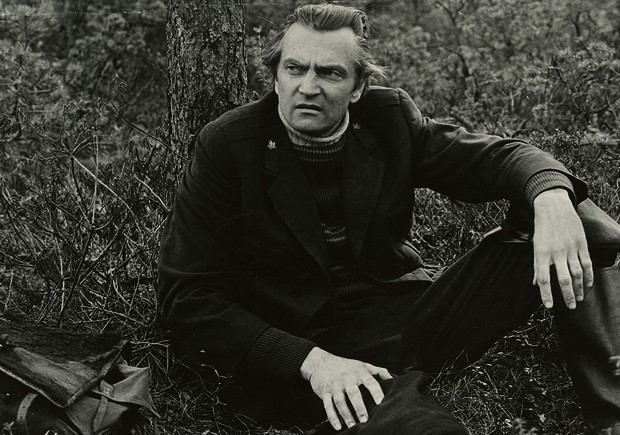

Estonian filmmaker Rainer Sarnet has often found his inspiration in literature. For his previous two movies, The Idiot (2011) and November (2018), he adapted the novels of Dostoyevsky and Andrus Kivirähk, respectively, into modern, artful fiction films. In his newest work, The Diary of Vaino Vahing, premiering in the Baltic Competition of the Tallinn Black Nights Film Festival, he takes the life, work and importance of Estonian psychiatrist, writer and playwright Vaino Vahing, and turns it all into an inspired, deftly dramatised documentary.

Outside Estonia and maybe the rest of the former Soviet Union (most notably Russia), Vahing (1940-2008) is not that well known. Born in the village of Aravu, he left for Tartu at the age of 14 to study Medicine, which was the best opportunity for him to get a scholarship. He decided to specialise in Psychiatry, in order to be able to truly know his patients and to exercise his interest in how the human mind works. That led to him taking an interest in literature and theatre, with his focus falling on two crucial, contrasting topics. On one side, there were the pain and suffering (usually induced by love) usually dealt with in his prose, and on the other, the nature of various games and game-playing (as a potential path to salvation from one’s suffering in life) in his dramas and his ventures into the domain of theatre.

From 1968-1984, Vahing kept a diary of real events that happened around him, passed through the filter of his own subjective interpretation, which serves as the primary source material for Sarnet’s film. Sarnet, however, opens the movie with a scene filmed in black and white, with a young woman dancing to a Beatles song, jumping from one block of books to another, before she gets interrupted by a man stating that he wants to have intercourse. It proves to be an excerpt from Vahing’s short story The Rapist.

Sarnet maintains material from both the fiction and the non-fiction works of Vahing until the end of the film, combining them with more standard documentary elements, such as interviews with scholars, literary experts and surviving family members (his ex-wife, writer Maimu Berg, and their daughter, judge Julia Laffranque), plus excerpts from archive material. While the interview parts are filmed in colour, with bright lighting, and the archive material is, naturally, grainy black and white, the dramatised re-enactments of the passages from his literary works are filmed in a modern, digital, polished, graduated palette of black-and-white cinematography.

More importantly, everything from the diary and the works of fiction is staged – always on the same stage, as Sarnet even shows by casually breaking the fourth wall around the midpoint – while different actors play Vahing and his female partners at different points in their lives. Their different sets of characteristics simulate the internal dialogue the writer probably had with himself. Their style of acting is a tad theatrical, but in a way that is intentionally faithful to Vahing’s games and experiments. The cinematography by Erik Põllumaa is beautiful and evocative, and the editing by Martin Männik and the film’s producer, Marianne Kõrver, is simply magnificent in its associative approach, and completely in sync with Sarnet’s vision, making The Diary of Vaino Vahing an artful, beautiful, compact and deeply thought-provoking piece of cinema. One could argue that Sarnet has nailed the very essence of Vaino Vahing’s life and work.

7.7.19

A Film a Week - Ghost of the Golden Groves

previously published on Asian Movie Pulse
Recently we had "Tumbbad", a formally conventional, yet mesmerizing, demons-infested tale of greed, reviewed here by yours truly. Another brilliant, yet differently dressed, debut comes also from India - "Ghost of the Golden Groves", penned and helmed by a Bengali duo Aniket Dutta and Roshni Sen, hidden under the pseudonym Harun al-Rashid (after an Arabian Nights character who is always masked). These two titles are not even remotely same kind of cinematic works, but now it is possible to argue that horror scene in India is gaining momentum quickly.

"Ghost of the Golden Groves" comes from Bengal and relies a bit on its tradition regarding the art house cinema dating from the 60's and Indian New Wave, but it is not the only clue needed for the interpretation of this diptych of strange ghost stories set deep in the backwoods and in the time when civilization started to visit those virgin lands. Some of the clues are spelled out, literally, early on: we can hear names Seijun Suzuki, Kaneto Shindo and Teshigahara, which are all the names of Japanese New Wave auteurs and if we were not listening carefully, Dutta and Sen will treat us with a couple of references to their work. Also, some other influences can be read: David Lynch, Alejandro Jodorowsky, acid western, experimental cinema as well as early and fairly basic science fiction B-movies, all of that shot predominantly in crisp black and white, or, better said, shades of grey.

The title is a bit misleading, there is not just one ghost, but more of them in those two stories that are connected only through the sheer strangeness of events and the clash of modernity and ancient, almost animalistic superstition as a lifestyle. The first, shorter part of the film titled "The Polymorph" and based on Dutta's own short story, follows the survey officer from Kolkata named Promotho (and played by Joyraj Bhattacharjee, glimpsed in Ronny Sen's astonishing "Cat Sticks") who came to the titular forest to map the roads that would run through the area in the future. He is met with hostility from the locals and tricked by a demon who took the shape of a local performer, so he ends up lost in space and time.

The second story, titled "Maya" and based on a short story by Bibhutibhusan Banyopadhyay, follows a poor, unemployed cook (Soumyajit Majumdar) who becomes a caretaker of a secluded, old villa owned by an eccentric old rich man (Jayanta Banerjee), despite the warnings about what happened to the previous men on his job. He does not seem to care even when a gas-masked woman, obviously from the future, starts visiting him in his dreams, followed by a group of similarly dressed people referred to simply as the others...

It would be easy, lazy and plain to write off "Ghost of the Golden Groves" for its awkwardness, because here it actually serves the purpose to tell an archetypical story about the clash between the new and the old, the civilization and wilderness. And Dutta and Sen do their best to tell it in a quite unique way, laced with humorous moments and striking visuals, effectively creating a memorable universe and using the storytelling means to the maximum effect.

Two things stand out here. One is the use of colour, first just suggested in the film's text when Promotho notices the green light in the forest only to be told by the carriage driver that people there see everything in black and white, then shown literally in cook's dreams and finally in the epilogue sequence where he recounts his story from a stage to the alien audience. That kind of use is far from the usual, it might even seem counter-intuitive a bit, but it makes sense and looks good paired with the rest of the black and white material shot by Basab Mullick that captures the attractiveness of the deep forest and primitive villages, complete with the "decay porn" of the crumbling villa.

The second one is sound design that is being used as a storytelling tool in a fresh way. Paired with an eclectic choice of music (done by Dutta), that includes rock, folk, jazz, blues, as well as electronic and modern pop, it creates a lasting impression, making "Ghost of the Golden Groves" one of the most pleasant surprises and arresting first-time filmmaking efforts in the terms of the strength and clarity of auteur vision.

9.6.19

A Film a Week - The Captain / Der Hauptmann

The biggest mistake the popular culture did with the Nazism is failing to even try to understand it. It is not some sort of mythical evil similar to the evil portrayed in religious scripts, it is a complex phenomenon whose perversity comes from the combination of banality, primitive hatred towards the others (whoever they might be), bureaucracy, fear of authority (real or assumed), and the petty nature of a small man who often does just about anything that would secure his existence. That means that fascism can come back again in some other form if it is not recognized as such in time, and all the WWII mythomania (both of its blends, Soviet and American) would do little to help fighting it. Understanding the mechanics of the system, the general and the most specific ones), might just do the trick. As it goes for cinema, The Captain, directed by Robert Schwentke, could serve as a good example of getting things right.

Schwentke's career goes two ways. Back at home, the German-born director is interested in bizarre, but pretty much true stories, like it was the case with Family Jewels, the semi-autobiographic film about the man who becomes obsessed with the idea to steal his amputated cancerous testicle. In Hollywood, where he made the most of his films, he has earned his reputation as a reliable genre helmer with a couple of thrillers (Tattoo and Flight Plan), a spy action flick RED and the two Divergent sequels under his belt. The Captain can be certainly put in the former group: it is a stylish, artistic war movie based on strange, but true events and shot in appropriate black and white widescreen.

In the opening shot we see our title hero Willi Herold (Max Hubacher) as a simple German soldier running away from his own army's patrol. It is early spring of 1945, the landscape looks muddy, his side is clearly losing the war, but his chances to survive as a deserter, looter and hunter-gatherer are quite slim, since the sadistic bureaucratic side of the Nazi system is still intact. It is the matter of time when he would be shot. However, his luck changes after he finds a perfect Luftwaffe captain's uniform in an abandoned car. He assumes the captain's identity and invents a bogus top-secret mission for the Fuhrer himself that revolves around scanning the state of things in the rear and dealing with the deserters.

Soon enough he is joined by the band of misfits, deserters and stranded soldiers like himself and for them he poses as a figure of authority. They are all in a grave danger whenever they come across any of the regular military and military police units, but Herold authoritative pose is convincing enough and his sadistic imagination is wild enough to keep him safe, even though it means he is about to commit a horrendous crime: the mass execution at the nearby prison labour camp for the deserters, thieves and looters.

The pitch-black and sometimes uncomfortably funny tone of the film does not come just from Herold's boldness and the willingness of his ragtag companions to join him in his crimes, but also from the reactions of the regular army and legal figures. Everybody he encounters from those ranks is at first sceptical about him and his outlandish backstory, but everybody is also willing to go along with it for their own reasons: the farmers and the townsfolk will use him and his "soldiers" to deal with the looters, the prison camp command wants to scheme its way towards the goal of getting rid of the "dead weight" - the inmates, and even the opposition he meets is more or less just of the procedural type. And that basically draws a picture of the Nazi regime in all of its monstrous network of deranged grand ideas and selfish interests.

Hubacher is stellar all the way through the film. His character is complex and so is his transformation from a benign deserter to a cold blooded executor. He starts as a man we are bound to root for and than gets chilly, cold and power-crazy. He is matched well the rest of the cast, Milan Peschel as his first follower Freytag, Frederick Lau as unscrupulous killer Kipinski, Brend Hölscher as the not-very-smart lieutenant Schütte, Alexander Fehling as the prison commander Junker and Waldemar Kobus as the bureaucrat Hansen. They are all doing a good job avoiding the contraptions of the broad Nazi stereotypes, but they are not milking the sympathy from the audiences - they are still monsters, just the different kind.

The stylistic approach Schwentke goes for also suits the film well and various influences can be read from it. The director is not shy to dig deep in the dirt and mud of war in the vein of later Soviet war films like Klimov's Come and See, be bleak like New German Cinema classics like Schlöndorf's The Tin Drum and at places shocking as Pasolini's Salo. The visceral qualities of the topic itself are paired with very cerebral use of deadpan humour and a dash of spectacle.

However, not all the tricks work: the title card after the bombing of the camp could as well be the end of the film, the following shot in colour is kinda out of place and the complete extended coda is completely unnecessary. The ending credits scene in which Herold and his gang are driving in the vintage six-wheel wartime car through the city streets of a present day German town also seems a bit on the nose as a metaphor that the new fascism that is on the rise will sure have its own Willi Herold.

Regardless of some minor problems, The Captain is the film that will leave the audience with a strong impression, and make the people think about it at least for a moment. And the blend of timeliness and timelessness adds to a point made in a smart and elegant fashion.