Showing posts with label serbian cinema. Show all posts

30.8.26

A Film a Week - The Forbidden Aunt / Zabranjena tetka

 previously published on Cineuropa


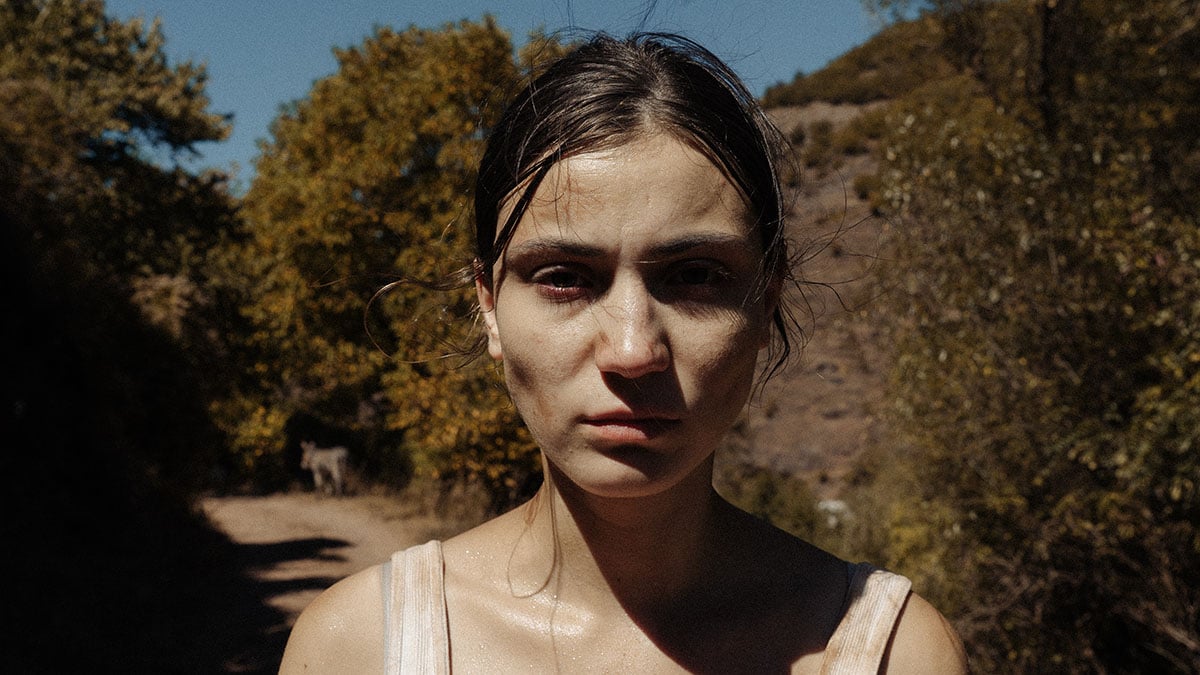
Serbian-Australian actress Bojana Novaković is widely-known for her work in television, as well as in Australian and Hollywood films, and people also know a thing or two about her highly-publicised past romances. Now, for the first time, she is testing her capabilities as a filmmaker with a documentary film inspired by the relationships within her own extended family. One could expect a strictly personal project, maybe even a proper artist’s ego trip, but The Forbidden Aunt truly transcends, and turns out to be something quite universal. The feature has just premiered in the documentary competition of the 32nd Sarajevo Film Festival.

The filmmaker’s starting point was an awkward situation she remembered from her childhood: her immediate family never let her spend too much time with one of her aunts, even though the woman had never harmed Bojana in any way and the filmmaker also remembers her as a fun person to be around. The reason for this attitude may have been aunt Gordana’s lifestyle, as she was what could be described as a bohemian. In an attempt to investigate the matter, Novaković goes back to Serbia in her hometown of Užice, where Gordana still lives, with the intention to make an easy-breezy documentary about her quirky aunt, who might be a bit foul-mouthed, but means no harm.

This is precisely what she appears like in the opening shot, where Gordana is giving her niece a lecture on the advantages of granny panties over g-strings. Also, she is the kind of person who is always happy to lend her neighbours a helping hand. Born the third daughter of a working-class family, she was never great at school, but she was a talented and inspired artist of a hairdresser who also loved to party in the company of men she easily fell for, and who did love a drink. Although her own children, Mladen and Marija, do not seem to hold any grudge against her, the truth is that their mother’s drinking was so excessive, and her behaviour so erratic, that they were basically left to fend for themselves as early as in their teenage years.

As soon as this is revealed, a breach is made which gradually opens, leading to a darker side of things, as the aforementioned destructive behaviour certainly had its reasons. Indeed, Gordana was an unwanted child, her “crime” being that she was a girl when her family expected a son. While her older sisters, Bojana’s mother Biljana and the family’s favourite, Mirjana, fared much better, Gordana was neglected. This childhood trauma caused by her parents later led, in adulthood, to her inflicting the same trauma to her own children, because hurt people hurt people.

The gesture of flipping one’s childhood memories upside down by digging into the darker side of one’s family’s past is not a particularly new one in documentary cinema – families always tend to harbour secrets and serve as battlefields for various conflicts between their members. The sincerity of the approach can help, but only so much. The thing with The Forbidden Aunt is that Bojana Novaković clearly sees a wider picture, but has enough discretion to refrain from using her family’s story as a metaphor of sorts for the Serbian and former Yugoslav society. Instead, she shows a lot of empathy for her aunt, possibly because she herself is no stranger to some of Gordana’s patterns of behaviour.

The special treat here is Novaković’s decision to listen to her aunt’s suggestion and insert a number of telenovela-style segments to re-enact moments of the family’s past, and to complement the rather scarce archive material and the newly filmed footage (of varying quality), shot by the filmmaker herself under varying conditions, which form the rest of the movie. The soap opera scenes, where Novaković plays both herself and Gordana alongside both professional actors and non-actors, serve the film quite well, due to Dušan Grubin’s lensing and Milica Kolarić’s inspired costumes. Thanks to these segments, The Forbidden Aunt feel a bit less like a necessary, but still very bitter pill to swallow.


2.5.26

A Film a Week - Remember My Song / Sjeti se moje pjesme

 previously published on Cineuropa


The collapse of Yugoslavia remains a subject of interest across generations in the states that succeeded it after the wars of the early 1990s. The central question is how the proclaimed ideals of “brotherhood and unity” in the former socialist regime morphed into nationalist hatred and quasi-tribal wars. Artists across different disciplines have sought to capture this transformation through metaphors drawn from a range of settings, such as ethnically mixed villages and towns, workplaces that employed large numbers of people, and communal spaces – bars, clubs, inns and taverns once widely frequented.

One such tavern that operated in the 1980s stands at the centre of the documentary Remember My Song, directed by Jelena Bosanac and Tanja Brzaković. The film has just premiered in the regional competition at ZagrebDox. The opening scene shows an ageing man reciting a poem about his village of Jugovo Polje beside its road sign. The rhymes are somewhat laboured and the worldview expressed in the poem is slightly naive, evoking the idyll before the war and portraying the war itself as a kind of demon that appeared from nowhere. The scene is followed by material from a personal archive, showing the immediate consequences of the events of the early 1990s: a bare structure too large to be a single residential unit, yet not large enough to function as an industrial building. In the ruins, completely ransacked years earlier, a woman finds an old LP record, and the time capsule opens.

It takes us to a tavern called Jablan, meaning “poplar”, which operated in a village near a busy road. Its owner, Nikola, was a capable businessman, and his wife Milena had a gift for managing staff. During the day, endless meals were prepared for passing truckers, and countless coffees from the first espresso machine in the area were served. On weekend nights, the tavern turned into a folk music disco, with live performances by aspiring singers and even established stars brought in from Belgrade. The owners and staff lived in harmony and unity, while the guests kept spending their money and “producing” countless anecdotes. Questions of nationality were never raised – until nationalism reached Jablan through its guests in the early 1990s, when politicians were stirring people up for war.

However authentic it may be, the story is quite typical, touching on all of the familiar cornerstones of idyll and nostalgia. What makes Remember My Song stand out, however, is the filmmakers’ approach. Much of the film is built entirely from found VHS footage and photographic material re-shot by Željko Felbar and edited by Hrvoslava Brkušić, using experimental forward and rewind techniques to create a psychedelic effect. This effect is further enhanced by the use of (Serbian) folk music, which taps into deeply rooted emotions and is further distorted by being sourced directly from ageing VHS recordings. Over this material, Milena, the waiters, the cooks, the musicians and the regular singer Haska narrate the stories they have collected.

The filmmakers’ decision to shift their approach once the tavern’s golden years are over, turning to a series of shots of empty spaces filmed by Boško Đorđević, proves to be another effective choice, as the stylistic contrast works very well and highlights the consequences of war and destruction. In the end, with Remember My Song, Bosanac and Brzaković may be telling a well-known, oft-told story, but they do so in a captivating manner.

28.9.25

A Film a Week - Our Father / Oče naš

 previously published on Cineuropa


Back in 2009, controversy erupted in Serbia. After a few leaked videos, showing recovering drug addicts being beaten in a church-operated rehabilitation centre, the unorthodox methods of the Orthodox priest Branislav Peranović came to light. The centre concerned, on the grounds of the Crna Reka monastery, was closed, but Peranović continued his work by founding another rehab clinic on the premises of another monastery. Only after one of his patients was killed by a severe beating at his hands in 2012 was Peranović arrested and stripped of his priesthood. Finally, this spring, he was sentenced to 20 years in prison, although this punishment is not yet final.

After making a name for himself with several shorts, one documentary and a few high-profile TV series, like Morning Changes Everything (2018) and Operation Sabre (2024), Serbian filmmaker Goran Stanković has made his fiction feature debut, Our Father, based on the testimonies of Crna Reka inmates. The film has premiered at the 50th Toronto International Film Festival, in the Discovery section.

We follow the events from the perspective of the newly arrived recovering addict Dejan (Vučić Perović, seen in Mother Mara), from his arrival onwards. A more seasoned inmate nicknamed Mionica (Croatian powerhouse actor Goran Marković) takes on the role of his mentor, and Dejan slowly learns the ropes of the centre. His tasks are to follow the path set out by the self-confident, hypocritical and often violent priest Father Branko (Boris Isaković) and to stay out of the way of his quick-tempered “deputies” Sava (Petar Novaković) and Ratko (Nenad Heraković).

Dejan starts believing in God and Father Branko’s preaching, so he quickly rises up the small community’s ranks. But as a video of him receiving beatings for one of his earlier misdemeanours appears in the media, he is forced to defend the controversial system that is both harming and helping him. With the case under public scrutiny, the question is not whether the situation is going to escalate, but rather when will someone be fatally injured by this unchecked power and violence.

The cinematography by Dragan Vildović, who also shot Stanković’s documentary In the Dark (2014), captures the spartan production design by Zorana Petrov in dark and murky colours that serve the topic well, while the editing by Marko Ferković reinforces the clear three-act structure and keeps the movie easy to follow at a perfectly measured pace for the running time of 90 minutes. The actors are deserving of praise as well, since Boris Isaković plays the villain in a nuanced manner, Vučić Perović matches everyman qualities with star power, and Goran Marković once again shows he is able to dig deep and serve as the troubled emotional centre of the film.

Our Father is a movie with a dense, tense atmosphere thanks to the script by Stanković and his collaborators Ognjen Sviličić, Dejan Prćić and Maja Pelević, which goes beyond exposing a specific affair and extends to the realm of those eternal psychological questions. Stanković’s precise directing also plays a part here: his sense of framing is perfect, as everyday activities are shown in hand-held shots and often in close-up, with the viewers’ attention directed at the actors’ faces, highlighting the secretive ambience, while the violence is pictured in chilling, continuous shots from a distance.

All of this amounts to a film that is equally effective for those who know the true-story context and for those who are about to encounter it for the first time. Our Father is a work that no viewer will be able to shake off easily.


7.9.25

A Film a Week - Sorella di clausura

 previously published on Cineuropa


If we are to believe an anecdote told by a shady character in Sorella di Clausura, Ivana Mladenović’s newest film, which has just premiered in the main competition of Locarno, the movie’s title is actually the name of an a cappella group consisting of Italian nuns. The odd thing about them is that, unless they are performing, which happens once a year, they live under a strict vow of silence. According to the popular Serbian folk singer Boban (played by the filmmaker’s father, Miodrag Mladenović, whom we saw in his daughter’s previous film, Ivana the Terrible), the same destiny awaits our protagonist, Stela (Katia Pascariu, from Radu Jude’s Bad Luck Banging or Loony Porn), but she claims that she cannot sing, because she is tone-deaf, completely missing the point of his metaphor.

Boban might not know, but Stela has a history with him. He was, and still is, her only crush, celebrity or otherwise, and her obsession with him started when she was 12 and she saw him on TV. That crush and obsession are probably the only things that keep Stela afloat in her sad and depressed existence. She is in her thirties, jobless and lives with her extended family in a cramped flat. The year is 2008, and Romania has just got into the EU, just in time to suffer all of the maladies that came with the global economic crisis.

However, Stela remains steadfast in her intention to get close to Boban, or at least to show her family that she might succeed in life against all odds. The road to both goals runs via a pop singer, Vera (Cendana Trifan), who is rumoured to be Boban’s newest fling, and who takes an interest in Stela’s writing, going by the example of her fan letters. The “rivals” soon become friends, and Stela gets a chance to get ahead in life. However, perks such as contact with renowned publisher Felix (Cătălin Dordea) and a ticket to access “high society” often come with bizarre consequences, like moving to different places in Romania, working as a sex-product tester or having to fake a hook-up with a younger Romani witch-doctor, Gabi (Adrian Radu), to please her hosts.

From Mladenović’s films so far, we have learned that we should expect the unexpected, even though they’re rooted in personal experiences of hers and her friends’. This might be the reason why she opens this one with a disclaimer that we are “wrong and possibly paranoid” if we expect to watch a film based on true events, while the end credits reveal that it is actually based on a memoir by Liliana Pelici. So, the events Stela stumbles through might not be true, exactly, but there are enough references to Mladenović’s (and not only hers) previous works to keep the viewer occupied chasing them, albeit not so many as to lose oneself in them. The film might be dedicated to her late friend and collaborator Anca Pop (the character of Vera seems modelled after her, to a certain extent), but there are also echoes of Radu Jude – not just for the fact that Katia Pascariu plays the same, seemingly mousy, but actually resourceful, type of character as in Bad Luck Banging…, but also because of Vanja Kovačević’s editing and the division into chapters that give an order to the idiosyncratic ideas.

According to Ivana Mladenović, Sorella di Clausura is an “empathetic parody of romantic melodramas”. That notion is valid, but the film examines many more things, from the pursuit of happiness, via the mechanics of obsession, to the imperative of success. Whatever it might be, Sorella di Clausura is unmistakably a film by a director with a strong signature.


3.8.25

A Film a Week - The Lost Dream Team / Izgubljeni Dream Team

 previously published on Cineuropa


Sports are often the source of national pride and unity: the whole nation tends to come together and stay behind an individual or a national team. But in the former Yugoslavia and the countries that succeeded it, fandom for an individual sportsperson or a national team is raised to the level of mythic adoration. National sports-powered “mythos” sometimes even gets epic proportions in an “alternative history” imagination. Some say that the collapse of Yugoslavia became possible after the unfortunate loss of the football national team against Argentina in the quarter-finals of the 1990 World Cup in Italy. Others harbour a conspiracy theory that the Americans were so frustrated with their college basketball players losing to Yugoslav teams that they forced the International Olympic Committee to change the rules regarding the professionals competing and created their own dream team of the best NBA players.

After a fantastic career in the short format crowned with the 2015 EFA award for Picnic and his fiction-feature debut Mater (2019), Croatian filmmaker Jure Pavlović has decided to try a new format – the feature-length documentary combining sports and the political drama of the Yugoslav basketball national team’s last hurrah at the European Championships in Rome in 1991. The premiere of The Lost Dream Team closed the 72nd edition of the Pula Film Festival. Judging by these events’ place in the collective memory all over the West Balkans, and by the rather universal angle Pavlović takes to accommodate international audiences, the film should have a healthy festival run, a theatrical release in several countries, and a prolonged exposure on television afterwards.

Throughout the 1980s, the Yugoslav men’s basketball national team became a powerhouse at continental and world championships, as well as at the Olympics, with players like Dražen Petrović, Vlade Divac, Toni Kukoč, Dino Rađa, Saša Đorđević, Predrag Danilović amongst others. The match in the finals of the 1992 Olympics in Barcelona never took place because Yugoslavia ceased to exist a year before, and the dissolution was followed by a bloody war. It was in fact during the very week of the European basketball championship in Rome that Slovenia and Croatia seceded from Yugoslavia and the short-lasting war in Slovenia broke out. After winning the championship, the national representatives did not have a country to return to.

Jure Pavlović interviews all the players from the national team as well as their head coach Dušan Duda Ivković and the team manager, but the focal point is Jurij Zdovc, the only Slovenian on the team, who was called by the government of his “new country” to leave the national team (and his comrades and friends) because of the Yugoslav aggression on Slovenia. Zdovc was also the focal point of a newspaper article written by Croatian journalist and novelist Boris Dežulović that actually inspired Pavlović to take a dive into the topic and the memory from his own childhood.

The result is a finely made classical documentary mixing sports and politics, to cathartic effect for the audience that remembers the events, and creating curiosity in younger spectators. Pavlović's approach, combining national television and private archives as well as newly shot interviews with the players and staff members, functions well thanks to the slickness in Dario Hacek’s camerawork, Julij Zornik’s masterful sound design and Ivan Vasić’s editing which turns the talking heads mode into something more artistic. The Lost Dream Team might seem like a simple piece of nostalgia, but it is also a deeply moving piece of cinema.


19.4.25

A Film a Week - Soil and Wings / Krila i tlo / Toprak ve Kanatlar

 previously published on Cineuropa


We tend to see religion in a certain, uniform light that is highly simplified and often unfavourable, to put it mildly. If we were to take Islam as an example, the first images that could potentially spring to mind may be the stereotypes of discrimination against women and fundamentalism. However, Islam is more diverse than that in a theological sense, as it is merely a wider framework of varied “schools of thought” and customs, beliefs and practices that are rooted not just in different interpretations of the scripture, but also in different folklores.

In his newest documentary Soil and Wings, Serbian filmmaker Stefan Malešević takes us to a very small and very specific Muslim community in North Macedonia. They are Bektashi, a small “sect” residing in the village of Kanatlarci. Their origins stretch to the Janissary soldiers of the Ottoman Turkish empire, while their practices are Sufi-Dervish. Soil and Wings has premiered in the regional competition of the 21st ZagrebDox.

On the “soil” level, we get to learn a thing or two about the community through the members of the Arifovski family, their hard-working life in the countryside, where they grow tobacco and watermelons, and their ways and beliefs. For instance, they are pantheists who equate not just women with men, but also humans with animals, plants and other things believed to have a soul. They also drink alcohol and find it medicinal in small doses. They speak an archaic dialect of the Turkish language, but the elders who have more contact with the outside world also communicate in Macedonian. And although they live in some sort of seclusion from other nations and religious groups, they do not reject the modern world. On another level, that of the “wings”, we get to see their psychedelic, mesmerising rituals being practised, and to hear their equally psychedelic and mesmerising myths and legends that shape their inner worlds.

Malešević definitely has a knack for studying small, secluded communities, as he demonstrated in his previous documentary Gora (2016): he proves he has the eye of an anthropologist, trying to capture the human essence beneath the surface of economic conditions, the burden of history and daily politics. With Soil and Wings, he immerses himself in the milieu even more deeply, and the result is not an observer’s film about the Bektashi people and their community, but rather a movie that feels, and is, very “Bektashi” in terms of its atmosphere.

Working as his own cinematographer, Malešević often uses long, slowly rotating panorama shots that become the perfect tool to either portray the tranquillity with which his subjects approach their lives, or to give a visual background to the voice-over narrations of their legends. The intelligently austere use of the music, composed by Branislav Jovančević, and the discreet sound design by Bojan Palikuća complement the visual component, while Jelena Maksimović’s typically inspired editing establishes a fitting, meditative pace.

In the end, and especially in its otherworldly ending sequence, Soil and Wings becomes quite a hypnotic experience that remains respectful to its subjects, and faithful to their way of life, rituals and beliefs. As such, it should also stay with the viewer for a long time after the screening is over.

16.2.25

A Film a Week - Wind, Talk to Me / Vetre, pričaj sa mnom

 previously published on Cineuropa


Stefan Đorđević started his artistic path as a non-professional actor in Nikola Ležaić’s Tilva Rosh (2010), playing one of the leads. After that, he lensed, wrote and directed a number of shorts and music videos, often collaborating with his friends and family members. His debut feature, Wind, Talk to Me, has just premiered in the Tiger Competition of IFFR. This docu-fiction might be both Đorđević’s most complete and most personal film to date. And since its auteur and protagonist is dealing with his mother’s death, there was probably no other way around it.

However, Đorđević opens his movie in a semi-abstract way, with a naturally dim-lit close-up of his hand touching a tree and saying a prayer to the wind. He is actually on his way home to his native village, and the stop he has made with his car leads to an encounter with a police officer, from whom he receives a warning. He is obviously in distress, and this will be further compounded when he accidentally hits a stray dog with his car.

At home, his whole extended family has got together – his grandmother and grandfather, brother, aunt, cousin and nephews. Everybody misses his mother, Negrica, but they are all trying to keep their spirits up. He probably misses her the most, not just for personal reasons, but also because she was the protagonist of his unfinished documentary portrait project. And the late mum was quite a character: a free-spirited and free-minded woman who lived in a trailer outside the village, in the woods and on the shore of the lake. She lived her life according to her own rules and unorthodox beliefs.

Stefan’s plan is to move into the trailer, spend some time there and try to finish the film, somehow. Maybe the first step towards it would be healing and adopting the dog he injured. The family is willing to provide support and assistance with his endeavour, but his lashing out at them signals that his wounds might run even deeper than he originally thought.

Thus far, it all seems like a typical documentary self-portrait, laced with some older footage woven into the deeper layers of it that serves as a perfect way for viewers to understand the filmmaker’s bond with his mother and the emptiness that haunts him now that she is gone. But the way he “directs” his extended family members as supporting cast members opens another meta-layer, and because of this, Wind, Talk to Me plays out like a small, intimate, but also universal, fiction film.

The artistry continues on the craft level, as cinematographer Marko Brdar lends an outsider’s eye both to the family dynamics and to the ambience. Julij Zornik’s sound design subtly enhances the sounds of nature, while the moody, synth-powered score by Ivan Judaš highlights the emotion. The pacing set by the joint editing effort of Tomislav Stojanović and Dragan von Petrović is deliberately moderate and comes across as quite natural for the processes of grieving and moving on. In the end, Đorđević manages to make Wind, Talk to Me a captivating film, both about his mother and about himself coping with her passing.

28.12.24

A Film a Week - Sun Never Again / Sunce nikad više

 previously published on Cineuropa


Children tend to see their parents as heroes, no matter how flawed the latter are in reality. On the other hand, parents have a harder time grappling with the harsh realities of life because, unlike their kids, they cannot simply escape to an imaginary world of their own creation. These two topics are central to David Jovanović’s debut feature, Sun Never Again, which has just premiered in Tallinn Black Nights’ First Feature Competition.

Our hero, Dule (newcomer Rastko Racić), views his father, Vid (Dušan Jović), as a hero who cannot do anything wrong, which may seem far from the truth because Vid is a stubborn man who struggles to accept the facts of life – such as the fact that their village, located in close proximity to a mine, is choking because of the pollution caused by its expansion. Furthermore, their neighbours are selling their houses and compounds. When an influential neighbour who works abroad, Rađo (the late Radovan Miljanić), comes to negotiate a deal for the house with Vid on behalf of the mine management company, Vid is quick to decline the offer, although his wife and Dule’s mother, Ada (Nataša Marković), is willing to accept it for the sake of the family’s health.

But Dule strongly believes in his father’s new project – a greenhouse in their yard – so he is willing to become its “protector”, either by coming up with some practical solution or by striking a deal with God himself (embodied by the legendary Svetozar Cvetković in a one-scene cameo). Vid sees it as a form of motivation to continue fighting against the corporate Goliath, his own surroundings and even his common sense, which he kept drowning in alcohol. However, being right does not entail actually being able to win…

The story of Sun Never Again is one of unlikely success, fuelled by the filmmaker’s resilience. He managed to collect modest funds in order to realise the demanding project through crowd-funding campaigns, and by motivating the cast and crew to give it their all for his vision. It is not Jovanović’s first time doing so: as a producer, he also made Nina Ognjanović’s 2023 Slamdance-premiering Where the Road Leads [+] (with which Sun Never Again shares the majority of its cast) come to fruition in similar working conditions. This time, the question of mining might resonate powerfully with domestic crowds, given that the protests against lithium mining are the staple diet of daily news outlets in Serbia, while its universal topic and artistic approach might seem suitable for international festival bookings in future.

Drawing inspiration from his own childhood and summers spent in a Bosnian mining village, as well as from David Lynch’s version of “The Ballad of Hollis Brown” (from his 2013 album The Big Dream), Jovanović crafts a film that unites the realist Yugoslav Black Wave with magical realism in an extremely potent way. The locations in the village of Krivelj in Eastern Serbia, where mines do actually exist next to the settlements, are shot perfectly in hand-held fashion and with dim lighting by Mladen Teofilović. The cast of lesser-known actors and extras hailing from the ranks of the locals blend well into the landscape, while the abstract music by Nemanja Mosurović and the striking sound design by Antonio Andrić also complement the visual aspect. Edited with good measure by the filmmaker himself, Branislava Stefanović and Mina Petrović, Sun Never Again leaves the impression of a contemporary symphonic poem.

21.9.24

A Film a Week - Dwelling Among the Gods / Među bogovima

 previously published on Cineuropa


Sometimes, it is hard to put a human face to large-scale and long-lasting events, such as the current refugee crisis, or even find the words to describe them, before one gets lost in numbers and statistical data. With his sophomore fiction feature, Dwelling Among the Gods, Vuk Ršumović tries to do just that by telling a story that happened (or at least could have happened) to people in Serbia, along the “Balkan Route”. It has premiered in the fiction competition of the 30th Sarajevo Film Festival.

An Afghan family consisting of mother Fereshteh (Fereshteh Hoseini), her husband, Reza (Reza Akhlaghirad), and three of their children has stopped in a refugee centre in Serbia en route to Germany. Through NGO lawyer Zoran (Vule Marković) and Dari-language interpreter Nikola (Nikola Ristanovski), Fereshteh has learned that the young man who drowned recently might be her brother Ali. She sets off on a mission to prove his identity and her relationship to him, claim his body and organise a proper burial.

However, every step of the way, there is a logistical, legal or bureaucratic obstacle to overcome, and time is of the essence, since members of Reza’s family want to continue their journey as soon as possible. The waiting and running around in circles affect the couple, too, and the fact that their elder, teenage daughter has fallen for a guy from their camp does not make things any more bearable. The idealistic Nikola is very willing to help, the more realistic Zoran less so, given that Fereshteh is not his only client, but the system personified in the nameless clerk (Petar Zekavica) is simply too rigid for such situations. And Fereshteh’s father’s insisting on getting Ali’s body to Afghanistan makes things all the more complicated.

For his previous film, 2014’s No One’s Child, Ršumović drew inspiration from a real-life case to tell the story of an individual who has to learn to survive in a closed system within a wider one that also depends on politics. While he changes the protagonist, the setting is quite similar here, with one or two added layers of “systems”, since Fereshteh also has to navigate her family, her primary cultural and religious environment, as well as Serbian bureaucracy. Crediting investigative reporter Momir Turudić as the co-screenwriter also suggests the origin of the story is rooted in true events that were happening along the Balkan Route.

Portraying the murky-grey landscape of both life inside the refugee centre on the outskirts of Belgrade and life in Serbia in general through the lens of Damjan Radovanović’s often handheld, cinéma vérité-style camerawork is a logical and fitting choice here that adds to the sense of urgency. The sound design by Dubravka Premar also stands out, filling the sonic landscape with a realistic murmur, meaning that Dwelling Among the Gods acts like a legitimate successor to the cinéma vérité classics.

The trouble arises elsewhere: in the casting and the work with the actors. The Iranian performers chosen for the two leads operate in an elevated emotional register, and the rest of the cast in a restrained, more realistic one, and this “clash” does not work in the leading actors’ favour. Also, the dramaturgical devices introduced to feed the audience with the context of Afghan culture where Fereshteh, as a woman, does not have the same degree of agency as her husband, father or brother, barely scratch the surface and merely constitute common knowledge. In the end, Dwelling Among the Gods is a noble and, to some extent, accomplished work, but its cinematic qualities remain unworthy of the urgency of the story it tells.


15.9.24

A Film a Week - Mother Mara / Majka Mara

 previously published on Cineuropa


Films centred on women of a certain age are not that common in Serbian cinema, and those that look at things from a distinctive, feminine perspective are even rarer. However, actress-turned-filmmaker Mirjana Karanović (of Esma’s Song fame) has decided to forge her filmmaking career with exactly this kind of movie. Her first directorial effort, A Good Wife (2016), in which she told the story of a woman who has to face up to her husband’s involvement in war crimes during the 1990s wars in the former Yugoslavia, made quite a splash on the festival circuit after its world premiere at Sundance. Her sophomore film, Mother Mara, has just premiered as an out-of-competition gala at Sarajevo.

The titular protagonist, played by the filmmaker herself, has just lost her son Nemanja (Pavle Čemerikić in flashbacks and short mobile phone-shot inserts), who was the apple of her eye. Mara raised him as a single mother, while also building a career as a corporate lawyer, and now, everybody from the ranks of her family and friends both at and after the funeral reminds her that she is left with nothing to live for. Since the stern Mara is not exactly the crying type, she tries to overcome her muted grief by returning to work.

There, a young man called Milan (Vučić Perović, mainly seen on Serbian TV) insists on her representing him in a routine probate case. Although this type of case is something more suitable for a junior lawyer at Mara’s firm, Milan has a strong argument: he knew the part of Nemanja’s life that was hidden from his mother, the gym sessions and the wild nights out in the floating river clubs in Belgrade. The strictly professional relationship between the middle-aged woman and the man, who is one generation younger than her, turns personal, carnal and romantic, placing Mara in a completely new situation.

As an actress, Karanović has a commanding screen presence, and she is quite expressive both in the muted and in the more vocal parts of her role, and the chemistry she shares with Perović is compellingly awkward, as is usually the case in slightly repressed cultures where many things are still taboo. The presence of regionally recognisable actors such as Boris Isaković (Karanović’s acting partner in A Good Wife), Jasna Žalica (recently seen in May Labour Day) and Alen Liverić (of No One’s Son fame) in supporting roles also works in the film’s favour.

Karanović has also developed a certain style as a director, based on intriguing and clear ideas, such as the camerawork by Igor Marović corresponding with the protagonist’s current state of mind, with the symmetrically arranged, static shots (usually taken from mid-to-long distance) and the more dynamic, hand-held ones both having their respective functions. The centrepiece scenes also look good, thanks to Lazar Predojev’s methodical editing. Production designer Dragana Baćović should also be commended for her work, since the sterile coldness of the sets corresponds with Mara’s milieu and her personality (or at least the façade of it), and the same goes for the discreet score composed by Ephrem Lüchinger.

Relying on the help of her co-writers Maja Pelević and Ognjen Sviličić, as well as Darko Lungulov, who is credited as a creative consultant, Karanović has made Mother Mara as a solid, controlled and well-thought-out piece of contemporary cinema. However, the lack of proverbial “dirt” in it sometimes makes it seem a tad too “doctored” to be heartfelt.


23.3.24

A Film a Week - Lilacs / Jorgovani

 previously published on Cineuropa


Although young filmmaker Siniša Cvetić is a new voice in Serbian cinema that combines artistic ambition with general audience appeal, he probably aspires to be regarded as an iconoclast of sorts. Judging by his debut feature, The Beheading of St. John the Baptist (2022) — which was warmly received by both audiences and critics but did not travel much beyond Serbia and its vicinity — and by his new feature, Lilacs, coming to theatres fresh from its premiere in the main competition of this year’s Belgrade International Film Festival FEST, his work is difficult to translate beyond the borders of the region. Cvetić however does not have to worry about Lilacs’ results domestically: the film opened while FEST was still in progress and sold over 50,000 tickets in its first week of release.

Here, he stays faithful to the single-location principle, but the setting itself is slightly different. While his previous film showed the festivities for one family’s patron saint’s day going haywire, the celebration here is of a different kind: we follow the cast and crew of a domestic hit series celebrating their “harvest” of awards at a probably rigged ceremony. Most of the action takes place at the spacious villa owned by the producer (Milutin “Mima” Karadžić), and the question isn’t whether the whole thing will go off the rails, but rather how…

The arrogant producer himself might fall victim to the scam of a “renowned” Russian filmmaker named Oleg (Nebojša Dugalić), who wants to squeeze a considerable amount of money out of him for his own upcoming adaptation of Leo Tolstoy’s Anna Karenina. There is also a fallout between the series’ jaded director (Gordan Kičić, mostly active on Serbian television lately) and a slightly overeager scriptwriter (rising star Pavle Čemerikić). Meanwhile, the couple of presenters — who are actually failed actors — engage in sloppy networking to look for their chances to break through.

But the main conflict that could harm the series as well as future projects is that which takes place between the series’ two star actors, Igor and Katarina (played by Ivan Bosiljčić and Sloboda Mićalović, respectively), who are also a couple in real life. He has committed a double betrayal, first by cheating on his wife with the younger actress Maja (Jana Bjelica), then by not telling her that Maja got the part she coveted in Oleg’s upcoming project.

To a viewer from abroad, Lilacs might seem like a run-of-the-mill behind-the-scenes comedy dealing with the darker side of show business. However, there is an additional metatextual level to the film, powered by timely references to Serbian (and, to a certain extent, regional) pop-culture. The name of the series — which also gives the film its title — comes from a late-80s duo that brought together a Serbian folk diva and a Bosnian pop-star, while the casting choices are very deliberate nods to the cheesy and melodramatic Serbian TV series where Bosiljčić and Mićalović both made their names, and in which they usually played a couple. This is the source of most of the film’s puns, but the casting of other actors and the way they play their characters also fuel the comedy and parody of David Jakovljević’s script.

In terms of direction, Cvetić pays attention to details but does not get lost in them, keeping an eye on the bigger picture at all times. Zoran Jovanović’s kinetic camerawork is an asset, while Tihomir Dukić’s precise editing keeps the unfolding of the plot clear and easy to follow. The Serbian turbo-folk song covers for both piano and brass band selected by Luka Broćić for the soundtrack can seem a little on the nose, but they actually fit well with the milieu that Lilacs portrays and makes fun of.


16.3.24

A Film a Week - Enough for Now / Za danas toliko

 previously published on Cineuropa


Just over four years ago, Marko Đorđević brought innovations to Serbian cinema, both in terms of milieu and style, with his debut feature My Morning Laughter. Set in and around the city of Kragujevac in the central part of the country and among ordinary people who were not lucky or unscrupulous enough to move forward with their life, the film portrayed both the place and its characters without romanticising them or adopting a condescending attitude, espousing instead a particularly austere, naturalistic style of predominantly long, static takes.

On his new film, he reunites with most of his cast and crew from that solo feature-length debut and returns to Kragujevac and to the realm of “normal” people. The stakes are a bit higher and the task seems a little harder, because Enough for Now could be described as a film about “nothing.” However, the film has won two awards at Belgrade International Film Festival FEST, where it premiered, confirming Đorđević’s status as an auteur to keep an eye on.

The film’s silhouette of a plot unfolds over a course of a couple of weeks in the early summer and revolves around a family “clan” consisting of three siblings. Moca, our protagonist (Filip Đurić, star of My Morning Laughter), is a doctor at the local hospital and single father to a precious little girl, Marta (newcomer Miona Pejković). They share the family house with Moca’s sister, Višnja (Ivana Vuković, Đurić’s main screen partner in Đorđević’s previous effort). The ritual of baking their favourite dessert, the coco cubes, summons Moca’s and Višnja’s brother, Vasa (Nikola Rakočević, star of numerous Serbian films), who is trying to make it as an actor in Belgrade.

A string of low-intensity events unfolds. Their childhood acting teacher has recently passed away and all three appear at his commemoration at the local theatre. Moca takes time off from work and tries to relax, but he also has to overcome his fear of driving. His best friend’s daughter, Vanja (Milica Jovović), is coming from Bosnia to take the entrance exam for studies in Kragujevac, and the family decides to drive her back home afterwards in order to visit her father, Duško (Croatian actor Goran Bogdan). All the time, the family dynamic is overly playful, even a little childish, signalling that there might be things unspoken between them, if not outright secrets.

The way Đorđević handles that “secret” until the moment of its revelation can be rather frustrating, in large part because it can be guessed at quite easily. He nevertheless manages to turn his film into a cathartic experience by the end. Đorđević relies extensively on his actors, their improvisation and mutual chemistry — which does not always always go smoothly, especially when more famous actors have to adapt to the rhythm dictated by the leading duo.

Style-wise, Enough for Now is definitely breezier and more playful than Đorđević’s previous work, with Stefan Milosavljević’s camerawork more fluid in capturing the film’s summer tones, Lara Bunčić’s compellingly cramped production design, and Jelena Anđelković’s colourful costumes. The music in different shades of pop, written by Sofija Milutinović, is also suitable, while one particular scene, a car chase that essentially comes out of nowhere, turns out to be a total delight and a perfect showcase for Đorđević’s varied talent.

25.3.23

A Film a Week - Mouth Full of Earth / Usta puna zemlje

 previously published on Cineuropa


Mladomir Puriša Đorđević (1924-2022) was a Serbian and Yugoslav filmmaker whose career spanned a period of over 70 years. As a director, he made more than 60 fiction features, shorts, documentaries and mid-length TV dramas, while as a screenwriter, he penned more than 70 scripts in all of the aforementioned formats. He was one of the pioneers of the Yugoslav Black Wave movement in the 1960s and 1970s, and that period of time marked the most prolific and most successful part of his career. He never retired from filmmaking: after finishing and presenting his documentary Monsieur (2021), he took on the demanding project of adapting a novel that was deemed unadaptable, Branimir Šćepanović’s Mouth Full of Earth (1974). Đorđević’s final movie, Mouth Full of Earth, premiered as the closing film of Belgrade FEST three months after his death.

Đorđević opens and closes his picture with a meta-framework located on a movie set in a wooded area near Belgrade. In the opening part, he shares an anecdote about his first encounter with spoken German during World War II, in his native town of Čačak, and his surprise at the silly songs that the German soldiers would sing. He admits that he expected more refinement from a nation that had such a strong presence in the realm of classical music.

That introduction does not have much to do with the adaptation of Šćepanović’s novel, which occupies the main part (60-plus minutes) of the film’s compact 75-minute running time. That main narrative thread follows Marko, played by Radivoje Bukvić (who has only recently returned to Serbian cinema after forging a career internationally). He is a man who, after being diagnosed with a terminal disease, flees from a hospital into the woods. Trying to hide away from the world in general, he also runs away from people who chase him for their own material reasons. In the process, Marko remembers other times in his life, both happier and unhappier ones.

Mouth Full of Earth can hardly be called a coherent piece of cinema. The reason for this is the very source novel, which pretty much follows the stream of consciousness of the protagonist, and in his script, Đorđević basically accepts this ground rule, even introducing some fleeting new characters, such as Sonja Kolačarić’s nurse. In terms of his directing, he tries to channel the same energy and the significance of his vintage 1960s works, most notably his war- and post-war-themed trilogy consisting of The Dream (1966), The Morning (1967) and Noon (1968), but of course, those same tactics and tricks cannot work equally well after more than 50 years have elapsed.

Luckily, Đorđević is able to rely on his actors and crew. Bukvić undeniably has star power (best seen in Mélanie Laurent’s Breathe) and the perfect physique for action-packed scenes (he is also a veteran of smaller roles in A Good Day to Die Hard, Taken, Our Kind of Traitor and Run All Night, to mention a few), Sonja Kolačarić has a strong and enigmatic presence in her most intriguing screen role so far, while the legendary Peter Božović seizes one more opportunity for a brilliant bit part. Gino Sgreva’s camerawork is kinetic and attractive, and the same goes for Marko Ristić’s editing and the eclectic choice of music. In the end, Mouth Full of Earth does not qualify as one of Đorđević’s masterworks, but it is certainly a film with the strong signature of a master filmmaker.

19.3.23

A Film a Week: A Fleeting Dream / Yu Grupa - Trenutak sna

 previously published on Cineuropa


The “rockumentary” genre might be seen as trivial, but there is usually a more complex story going on than one solely about the band, its members and their music, since every group and performer exists in a wider social context. This is certainly the case with Darko Lungulov’s A Fleeting Dream, a documentary about one of the oldest and the longest-living Yugoslav rock bands, Yu Grupa, whose cultural significance is immense for the region. World-premiering at the Belgrade International Film Festival, this documentary about a band whose significance is strictly regional might prove hard to sell to “regular” film festivals, but it should fare reasonably well on the regional circuit and at specialised film gatherings.

Founded in 1970, Yu Grupa is a phenomenon for several reasons. Its founding members are the Jelić brothers: the eldest, Žika, on the bass and the youngest, Dragi, on guitar. Their previous musical projects also involved the middle brother, Rade, whose son, the film’s main narrator and music composer Petar, joined the band in the 1990s. The “family affair” was rounded off with a string of drummers: Raša Đelmaš, Dragoljub Đuričić and Saša Radojević Žule, who played with the band in different phases of its journey.

Music-wise, Yu Grupa was one of the first bands to forge a distinctive blend of Yugoslav rock that combined influences from the West, such as rock and roll, and rhythm and blues, with folk/ethno tunes from the Balkans. As such, the group was among the first to legitimise the new, “Western” sound in the socialist country of Yugoslavia, and even had a shot at international glory at one point, but it remained faithful to its home country, since the members saw their work as an integral part of its transition to a more open society.

The most interesting thing about the band is probably the context of the very country that the group outlived, and its history as seen from the point of view of the distinctive individuals. Firstly, the Jelić brothers and their parents were among the first settlers in New Belgrade, the town founded by the new government after the war. And secondly, the fact that a band named after the country outlived it without even changing its moniker is pretty amazing.

But after the 45-50 years of the band’s existence, there are new personal and global challenges to overcome. To allow his son to get proper therapy, Petar has to move to Sweden. And, of course, COVID-19 could prove especially dangerous to his elderly uncles, Žika and Dragi. Can the band survive it?

A move in the direction of a “trivial” genre might seem a strange one for a filmmaker as seasoned as Lungulov, but there is nothing trivial about A Fleeting Dream. The director and a small army of cinematographers spent seven years filming the new material, while the helmer worked with editor Miloš Korać for two additional years in order to combine it with footage from public and private archives, the latter including the Jelić family’s Super-8 home movies. The blend of interviews with the musicians, with other family members and with rock critics, old and new concert videos, family photos and home movies, as well as the archival material thematising the less well-known parts of Yugoslav history, is smooth and emotional, as it serves up a lot of information in an unrelenting, rock and roll-like rhythm, while Petar Jelić’s score consisting of rearranged, slowed-down themes from the band’s songs always strikes the right chord. As is the case with the band, A Fleeting Dream is not an ephemeral thing, but something that stays with us.


5.2.23

A Film a Week - Where the Road Leads / Ovuda će proći put

 previously published on Cineuropa


When it comes to the western as a genre, in both its classical and its “neo” incarnations, it is less about the macro location and more about the micro one. A movie does not have to be set in the American West to be a western, but it does have to get the genre tropes right, even if it is set, for instance, in a very rural part of South-Eastern Serbia in an unspecified period between the 1980s and the 2020s. In that regard, the premiere of Where the Road Leads at Slamdance should serve as confirmation that newcomer Nina Ognjanović has mostly done things right with her modestly budgeted, but stunning, graduation work.

Dawn is breaking, and Jana (Jana Bjelica, glimpsed in Oleg Novković’s The Living Man) runs up and down dusty paths amidst a hilly landscape. She gets home, overhears a conversation that sounds cryptic, signalling it might turn out to be important, and gets her bag, but she does not change out of her simple, white dress. In another of the village houses, one that serves as an improvised tavern, innkeeper Ruža (Branislava Stefanović) and her grumpy husband (legendary actor Svetozar Cvetković) are having trouble serving the already drunk brothers Petar (Ninoslav Ćulum) and Pavle (Vladimir Maksimović), so they send their pre-teen grandson Mirko (Demijan Kostić, adorable) to get the local law enforcer Đura (Igor Filipović), who has just gone for a shave and to get his latest fill of rumours at the barber’s house. However, he is being served by the barber’s young, insecure son (Pavle Čemerikić, of Stitches and The White Fortress fame).

The thing is, Petar and Pavle are threatening to kill the new guy who arrived the day before, talking the talk, like all of the previous new guys did, and the villagers half-believe their threats. The only one who is genuinely scared about such an outcome is Jana, and for good reason: the man in question (played by Zlatan Vidović, very active on the big and the small screen recently) may very well serve as her ticket out of the despair of spending her whole life in the secluded village. Halfway through, however, the filmmaker surprises the audience with a flashback to the day before in order to explain the title (a new highway is being built in the vicinity), the background of the stranger who came to the village, his connections with it through his great aunt Rajka (Eva Ras) and the nature of the potential conflict, or at least the misunderstanding with the locals.

This kind of time-hopping structure proves to be a clever move, as Ognjanović uses the first half to establish the nature of this place where time appears to be standing still, and its inhabitants, through a number of nicely downplayed design details (kudos to Neva Joksimović on the production design and Martina Malobović on the costumes), and the second half to explain the mystery of the two worlds colliding. By using locations in the real-life remote village of Topli Do and giving a good sense of the local geography (with the help of cinematographer Vladislav Andrejević, who puts the earthy greys, browns and rusty reds to good use), placing a great deal of trust in her actors, infusing proceedings with tension through the string-heavy score by Ana Krstajić, and instructing editor Rastko Ubović to maintain the pace and to keep the running time to the low 80 minutes, Ognjanović manages to tell this timeless story with elegance. The end result is a stunning, stylish and sure-handed debut that gets all of the western and backwoods-noir tropes absolutely right.

13.3.22

A Film a Week - Heroes / Heroji

 previously published on Cineuropa


A warrior returning home from battle is an ages-old literary trope and at least a century-old movie one. Combining it with other ideas and influences, Serbian filmmaker Goran Nikolić has created his debut feature, Heroes, which is a unique film experience in the realm of Serbian and regional cinema. The movie premiered at the Belgrade International Film Festival FEST, and it has a solid chance of securing national distribution and gaining further international exposure at niche festivals.

The plot, if there is one, is fairly basic. It is the aftermath of the Battle of Kosovo, which happened in 1389, and a Serbian knight, played by Mladen Sovilj, of The Disobedient  (2014) and Offenders (2017) fame, is on his way home while suffering from terrible PTSD. A young orphan (newcomer Todor Jovanović) joins him on the road. The warrior does not wish to have company at first, but as the journey progresses and becomes increasingly insufferable, he feels more ready to protect the playful, sometimes annoying, kid. However, the visions of the past (or maybe the future) keep haunting him…

There are influences to be noted here, both literary (from Serbian epic poetry) and cinematic, which could be described as a funky melange of the Serbian propaganda spectacle The Battle of Kosovo (1989), Nicolas Winding Refn’s visceral masterpiece Valhalla Rising  (2009) and the artsy indie road-movie genre, not too dissimilar from The Disobedient. Further connections with the first-mentioned can be noted in the presence of one of The Battle of Kosovo’s leads, Žarko Laušević, as the narrator, as well as the same sword and shield that were used in the 1989 movie. Refn’s film is represented through the visceral approach and the thematising of the topic of the PTSD that the characters are unaware of. Finally, the bright summer colours, captured by cinematographer Vladimir Đurić, which stand in sharp contrast with the sombre mood of the film, are clearly borrowed from differently toned movies, but here they work perfectly, thanks to Nikolić’s strong directorial vision.

However, there is one particular gimmick that shapes everything in Heroes: it is completely dialogue-free, and the only spoken words come from the narrator, who is the kid himself, but is now grown up thanks to the knight’s heroic efforts. The concept of the narrator seems forced, and the narration written by Kosta Peševski pretty much states obvious things that the viewer can see from the imagery. However, here, it is necessary to fill the void when the repetitions, the bizarre moments (such as the kid starting to engage in beatboxing all of a sudden) and the editing tricks (like occasional jump cuts) are not enough to stretch the film out to a feature format. On the other hand, the actors handle the pressure of being unable to express themselves through speech very well: Sovilj shows off his skills in non-verbal micro-acting, while Jovanović is adorably natural in his role. Finally, the counter-intuitive score that blends modernised folk tunes, out-of-place church music and modern genres composed by Ana Krstajić is one of the strong points of the film, as it channels the mood and fills the gaps left in the soundscape owing to the lack of dialogue.

All things considered, Heroes would be a killer short, which should not come as a surprise, given that Nikolić has had some practice in this format. As a feature, however, it is still compelling and strong despite the shoestring budget it was made on, and as a debut, it edges on the realm of the impressive.


3.10.21

A Film a Week - Roots / Koreni

 previously published on Cineuropa


A van drives along roads, through woodlands, villages and the small town of Dvor in the region of Banija, Croatia, carrying different groups of passengers who share their stories. That would be, in short, a description of the “plot” of the newest documentary by Serbian filmmaker Tea Lukač, Roots, which has just premiered in Karlovy Vary’s East of the West competition.

Four kids in meticulously decorated masks travel back from a carnival party, clutching their sweets. The energy and the dynamics they share are natural and playful, but they are acutely aware of what the adults around them do, say and think – who drinks and who puts the emphasis on social differences. A young foreign man, maybe a tourist, maybe a refugee, sits in the back alone, playing a game on his phone in silence. Two women talk about the petitions against storing nuclear waste on the territory of the municipality and the local administration’s lack of care for the citizens combined with its attitude of entitlement. In the emotional climax of the film, a middle-aged woman shares the painful story of her life, including the abuse she was exposed to, bad marriages, poverty and hard work as she brought up her three children whom she now takes pride in. An a cappella band of four sings sad, atonal local folk songs, joking a bit between verses. An old man shares his story about barely surviving a hornets’ attack in his childhood without any proper medical treatment, which made him immune to the Asian Flu pandemic later on.

The last “passenger” is a bag of groceries; there is no human presence in the final story, which brings us full circle, from youth to absence. A lack of humans also marks the interludes between the stories, in which Lukač shows the surrounding nature in all its harsh and unforgiving beauty. Later on, the traces of human activities, like the stumps of young trees, a flock of sheep and pieces of infrastructure, are also shown in the interludes.

The way Lukač approaches the topic works wonderfully in its simplicity. All the rides are shot in single, static, continuous takes from the front seat of the van, looking back and showing the environment through the back window. The interludes, however, consist of a series of shorter, also static, shots edited by Nataša Pantić to relax the viewer a bit, before ratcheting up the tension again. The camerawork by Sara Preradović is cool-handed and stable, in sync with the natural-looking colours, and it serves the purpose perfectly here. The sound design by Bojan Palikuća speaks volumes by enhancing the sounds of nature and toning down the noises related to the human presence on the roads and in the towns.

The title Roots clearly alludes to Lukač’s own family roots in that particular area, whose traditions, history and ethnology she explores along with the challenges of daily life there. The term “roots” is usually used in a national or ethnic context, but not here. Lukač and her subjects never talk about the conflicts, World War II or the 1990s war in Yugoslavia, which hit the area hard and are definitely still present in the locals’ memories. The roots she explores here are more universal and more humane. Roots is simply a beautiful love letter to her own roots and to this specific geographical location in all its beauty and harshness.

5.9.21

A Film a Week - ŽŽŽ (Journal About Želimir Žilnik) / Žurnal o Želimiru Žilniku

 previously published on Cineuropa


Želimir Žilnik is a filmmaker whose unique style and approach blur the line between documentary and fiction. His fiction films have the documentary qualities of truthfulness, while his documentaries are as tense as fiction films. In more than 50 years as a filmmaker, he’s directed more than 60 films, short and feature-length, documentaries, fiction films and hybrids in which he aimed to expose the part of the truth that was hidden under the surface. Now he has himself become the subject of a documentary called ŽŽŽ (Journal About Želimir Žilnik), written and directed by Janko Baljak, known for his documentary work predominantly in the short and mid-length TV format, on socially relevant topics for Serbia and former Yugoslavia from the early ‘90s onwards.

ŽŽŽ (Journal About Želimir Žilnik) premiered in the documentary competition at the 27th Sarajevo Film Festival. The influential filmmaker at its centre should suffice to secure it some further exposure, especially in the West Balkan region and also at specialised festivals. The film will eventually land on television, where its informative qualities and clear structure should play well.

The title of the film is actually a word play on the title of Žilnik’s breakthrough short documentary Newsreel on Village Youth in Winter (1967) which opened another angle in the perception of the reality of socialist Yugoslavia, but Baljak opens the film with a discussion about another one of Žilnik’s controversial works, namely his unfinished film Freedom or Cartoons (1972) whose production was halted by the authorities. ŽŽŽ (Journal About Želimir Žilnik) is structured as a road movie of sorts in which Žilnik, accompanied by Baljak and his crew, revisits his old films, the locations they were shot in, crew members and colleagues, the subjects that have survived, such as the iconic Pirika, the star of Little Pioneers (1968) and Pirika on Film (2013), and their descendants. Of course, the milestones of Žilnik’s career are mentioned, such as his Golden Bear-winning film Early Works (1969), the court process about a possible ban of the film that ensued, Žilnik’s relationship to the so-called Yugoslav Black Wave, as portrayed in his short documentary Black Film (1971), his exile in Germany during which he made five shorts over the course of a single year, his return to Yugoslavia, his work of exposing the schizophrenia and the violence of the ‘90s, as shown in his films Tito’s Second Time Among the Serbs (1994) and Marble Ass (1995) and his striving to find a humane way to deal with the current state of capitalism and the ongoing refugee crisis with which he dealt in his newest films. The efforts to regain the remaining tapes of Freedom and Cartoons and to finish the film as a testament of sorts is, however, a thread that is woven into the film from the beginning to the end.

With such a rich career, Žilnik as narrator and guide is probably the greatest asset of the film, as he has many stories and anecdotes to share with the audience. Baljak has the task to steer and “edit” him a bit, which he does with great respect, actually capturing Žilnik’s spirit and even continuing his work in a way. Scored by one of Žilnik’s frequent collaborators Predrag Vranešević and smoothly edited by Aleksandra Milovanović in order to blend the newly filmed material with Žilnik’s old work as well as with archival material, such as newspaper clippings, ŽŽŽ (Journal About Želimir Žilnik) is a pleasant and informative watch and a strong tribute to a great filmmaker.